
If you’re new to the assisted living industry, you’ve probably come across a lot of confusing terms and acronyms. This easy-to-follow glossary explains the most important assisted living terms you’ll encounter, so you can feel confident and informed as you navigate this field.
Assisted Living Terms You Need to Know
A–D (Assisted Living Terms)
- Activities of Daily Living (ADLs):
Basic self-care tasks people do every day, like bathing, dressing, eating, using the bathroom, and moving around.
Why it matters: Care providers often assess how much help a resident needs with ADLs to create a care plan. - Advanced Directive:
A legal document where a person outlines their healthcare wishes if they become unable to make decisions later.
Why it matters: Helps ensure a resident’s end-of-life care preferences are respected. - Aging in Place:
When seniors remain in their own homes or community as they grow older, with support services brought in as needed.
Why it matters: This allows seniors to stay independent and comfortable while receiving necessary care. - Assessment:
An evaluation of a resident’s health, emotional, and personal care needs used to develop a care plan.
Why it matters: Accurate assessments help ensure residents receive the right level of care. - Assisted Living Facility (ALF):
A licensed care facility that offers housing, personal care services, meals, and health monitoring for seniors who need assistance but don’t require full-time medical care. - Care Plan:
A written plan that outlines a resident’s healthcare and personal care needs, along with how and when those services will be provided.
Why it matters: Care plans help caregivers deliver consistent, personalized care and meet compliance requirements. - Centers for Medicare & Medicaid Services (CMS):
The federal agency that regulates healthcare programs and oversees compliance for facilities participating in Medicare and Medicaid. - Continuing Care Retirement Community (CCRC):
A community offering different levels of care—independent living, assisted living, and skilled nursing—allowing seniors to stay in one location even as their care needs change. - Deficiency:
A problem found during a regulatory inspection or survey showing that a facility is not meeting required care standards.
Why it matters: Deficiencies must be corrected quickly to maintain licensing and avoid penalties.
E–H (Assisted Living Terms)
- eMAR (Electronic Medication Administration Record):
A digital system that tracks and records when medications are given to residents.
Why it matters: eMAR systems reduce medication errors, improve resident safety, and simplify compliance during inspections.
- EHR (Electronic Health Record):
A secure, digital version of a resident’s complete health history, including medications, diagnoses, and care plans.
- Hospice Care:
Compassionate care provided to residents with terminal illnesses, focused on comfort and quality of life rather than curative treatment. - Home Health Services:
Medical and therapy services delivered in a resident’s home or care facility, typically by licensed nurses or therapists.
I–M (Assisted Living Terms)
- Independent Living (IL):
Housing communities designed for seniors who can live on their own but want access to social activities and convenient services. - Inspection:
A formal visit by regulatory agencies to review the safety, health, and operational standards of an assisted living facility. Inspectors assess everything from resident care and staff training to medication management and recordkeeping.
Why it matters: Inspections are critical for maintaining your facility’s license and avoiding costly penalties. Being prepared helps ensure a smooth process and continued compliance. - Instrumental Activities of Daily Living (IADLs):
More complex daily tasks like managing finances, handling medications, shopping, cooking, and using transportation.
Why it matters: IADLs are often used to assess a senior’s level of independence. - Long-Term Care Insurance (LTCI):
Insurance that helps pay for assisted living, home care, or nursing home services.
Why it matters: LTCI can help families manage the cost of senior care. - Medication Administration:
The process of giving medications to residents safely and accurately, often tracked through an eMAR system. - Medication Error:
A mistake in giving the correct medication, dose, or timing.
Why it matters: Reducing medication errors is critical for resident safety and regulatory compliance. - Memory Care:
Specialized care for residents with Alzheimer’s disease, dementia, or other memory-related conditions.
Why it matters: Memory care units offer tailored support and a secure environment for residents with cognitive decline.
N–S (Assisted Living Terms)
- Nursing Services:
Healthcare services provided by licensed nurses, including wound care, medication management, and health monitoring. - Personal Care Services:
Non-medical help with daily activities like bathing, dressing, grooming, and eating. - Plan of Correction (POC):
A formal plan submitted after an inspection detailing how a facility will correct identified deficiencies and prevent them from happening again. - Private Pay:
When residents or their families directly pay for care services, rather than using insurance or government funding. - Quality Assurance and Performance Improvement (QAPI):
A structured program used by care facilities to continuously improve care quality and operations. - Resident Rights:
Legal protections that ensure residents receive dignified, respectful treatment and maintain their privacy and independence. - Respite Care:
Short-term care provided to give family caregivers a break from their regular caregiving responsibilities. - Service Plan:
A plan that outlines the personal care services a resident will receive, including meal preparation, housekeeping, and social activities. - Skilled Nursing Facility (SNF):
A facility that provides 24-hour nursing care and medical services for residents who need ongoing medical attention. - Survey:
A formal inspection conducted by regulatory agencies to review compliance with state and federal care standards.
T–Z (Assisted Living Terms)
- Temporary Stay (Short-Term Stay):
A short-term arrangement where a resident stays in a care facility for a limited time, often for recovery after hospitalization or to provide respite for family caregivers. - Termination of Residency:
The formal process of ending a resident’s stay in a care facility, typically requiring written notice and compliance with state regulations. - Third-Party Services:
Care or support services provided by outside professionals, such as physical therapy, hospice care, or counseling. - Transition Plan:
A plan to help residents move smoothly between care environments, such as from home to assisted living or to a higher level of care. - Transportation Services:
Assistance provided by a facility to help residents attend medical appointments, social outings, and other off-site activities. - Ventilator Care:
Specialized care for residents who require mechanical ventilation to assist with breathing.
Why it matters: Facilities providing this service must meet strict medical standards and employ trained staff. - Volunteer Services:
Programs that involve community members offering their time to support residents through companionship, activities, and non-medical tasks. - Wandering Prevention:
Safety measures and systems used to prevent residents, especially those with dementia or memory loss, from leaving the facility unsupervised.
Why it matters: These protocols are critical for ensuring resident safety. - Wellness Programs:
Organized programs that promote residents’ health and well-being through fitness classes, health screenings, nutrition support, and social engagement.
Quick Reference: Industry Acronyms & Medication Abbreviations
Common Industry Acronyms
| Term or Acronym | Definition |
| PRN | As Needed or As The Situation Arises |
| BP | Blood Pressure |
| HR / Pulse | Heart Rate |
| MAR | Medication Administration Record |
| RN | Registered Nurse |
| NP | Nurse Practitioner |
| DSP / CG | Direct Support Professional / Caregiver |
| POA | Power of Attorney |
| CP / NCP | Care Plan / Negotiated Care Plan |
| RM / RCM | Resident (Care) Manager |
| LTC | Long-Term Care |
Medication Administration Abbreviations
| Abbreviation | Meaning |
| QD | Daily |
| BID | Twice a Day |
| TID | Three Times a Day |
| QID | Four Times a Day |
| HS | At Bedtime |
| QOD | Every Other Day |
| AC / PC | Before Meals / After Meals |
| Q6H, Q8H, Q12H | Every 6, 8, or 12 Hours |
| 1QW–6QW | X Times Per Week |
| 1M–4M | X Times Per Month |
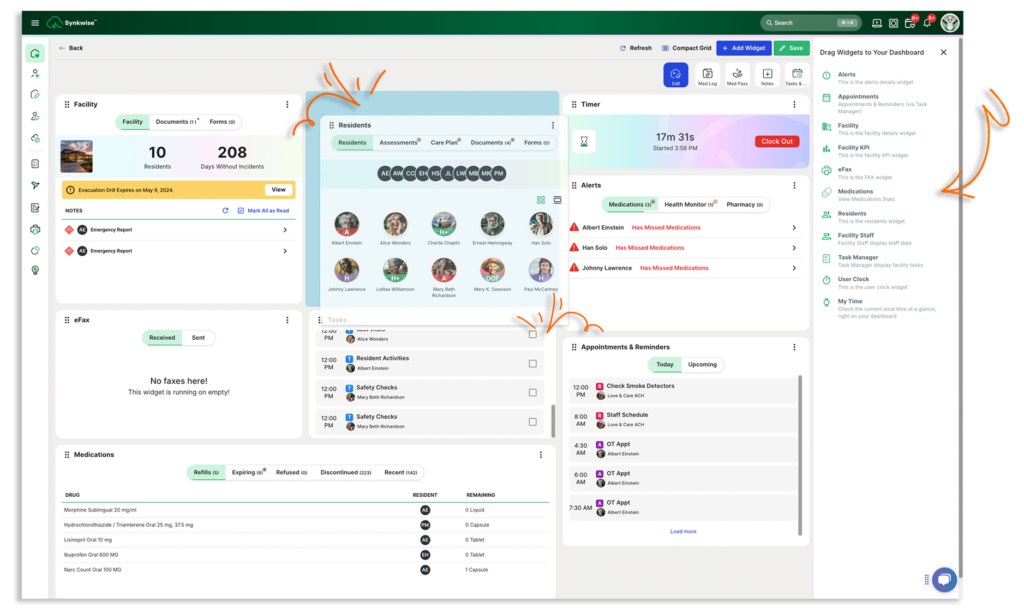
? Simplify Care Planning and Compliance with Synkwise
Managing care plans, medication tracking, and compliance doesn’t have to be complicated. Synkwise makes it easy with a powerful, user-friendly platform built for assisted living providers.
? Schedule a Demo or Learn More About Synkwise